

 Loading...







Play Stickman Hook and prepare to lose yourself in one of the most addictively satisfying physics-based games ever created. This brilliant arcade title challenges you to swing, bounce, and fly your way through hundreds of expertly designed levels with a brilliantly simple one-button control scheme. It's a game of pure momentum, timing, and flow, where every latch and release feels impactful and rewarding. Whether you're a newcomer looking for a fun and accessible game to pass the time or a hardcore player chasing the perfect, lightning-fast speedrun, Stickman Hook offers a captivating experience that is impossible to put down.
This comprehensive guide is your ultimate resource for mastering the art of the swing. We will take you from your first wobbly arcs to a state of flawless, acrobatic flow. We'll break down the core physics, reveal advanced strategies for maintaining and building momentum, and provide pro tips for navigating the trickiest obstacles. You will learn the secrets to unlocking every character skin and become a true virtuoso of the grapple hook. Get ready to tap, swing, and soar your way to victory in this masterpiece of minimalist game design.
Table of Contents
- What is Stickman Hook? A Masterpiece of Momentum
- How to Play: Your First Swings to Victory
- Mastering the Simple One-Touch Controls
- Understanding the Core Mechanics & Physics
- Advanced Strategies for Momentum, Timing, and Flow
- Pro Tips & Tricks for a Faster Finish
- Level Design, Progression, and Obstacles
- Customization: Unlocking Every Skin
- Similar Games for Fans of Physics and Flow
- Sequels, Modes, and Unblocked Versions
- Download Stickman Hook (iOS & Android)
- Frequently Asked Questions (FAQs)
- Conclusion: Finding Your Rhythm and Flow
What is Stickman Hook? A Masterpiece of Momentum
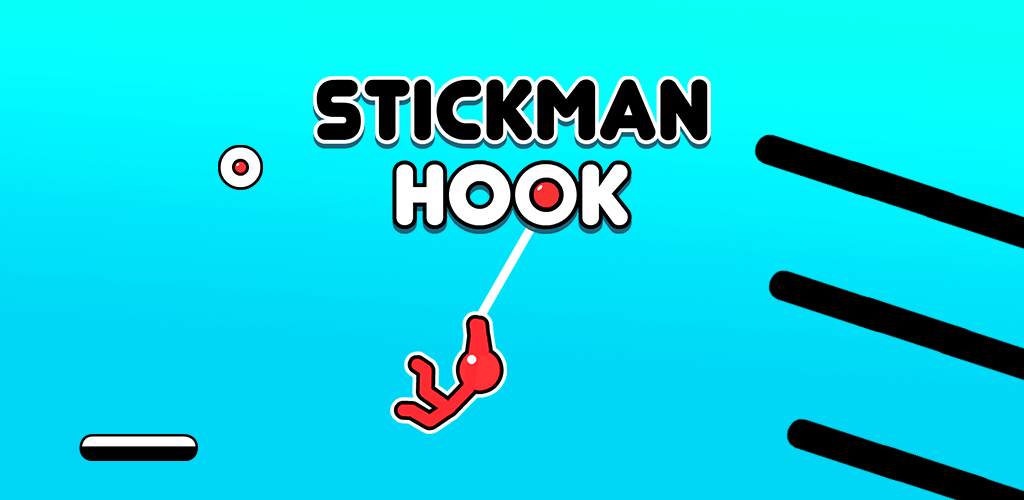
Stickman Hook is a 2D physics-based arcade game developed by the French studio Madbox, known for creating colorful, accessible, and highly addictive mobile and browser games. Since its release, it has been downloaded tens of millions of times, captivating a massive global audience with its elegant design and deeply satisfying core gameplay loop. In the game, you control a simple stickman character who must navigate from a starting point to a finish line by swinging from a series of anchor points, much like a certain web-slinging superhero.
The genius of Stickman Hook lies in its purity. There are no complicated controls, no distracting story, and no convoluted systems. There is only you, the anchor points, and the laws of physics. The entire game is controlled with a single input: a tap or a click. Tapping latches your rope to the nearest anchor, and releasing lets you go, sending your stickman flying through the air. This simple mechanic forms the foundation for a surprisingly deep and skill-based experience. Players must learn to master momentum, timing their releases to launch themselves with maximum speed and precision, and using environmental elements like trampolines and bumpers to chain together fluid, acrobatic combos.
The game is structured into hundreds of short, bite-sized levels, making it perfect for quick play sessions. Yet, the drive to achieve a "perfect" run, to shave milliseconds off your time, and to unlock the vast collection of cosmetic character skins gives it immense long-term replayability. It's a game that perfectly embodies the "easy to learn, difficult to master" philosophy, creating a state of "flow" where players become completely absorbed in the rhythm of swinging and soaring.
How to Play: Your First Swings to Victory
Getting started in Stickman Hook is incredibly easy, but understanding the fundamental goal and the path to achieving it will set you up for success.
The Core Objective: From Start to Finish
Your goal in every level is to get your stickman character from the starting platform to the checkered finish line. The primary way you will move is by swinging. If your stickman falls off the bottom of the screen, you will instantly reset to the beginning of the level. There is no penalty for restarting, encouraging experimentation and risk-taking.
The Gameplay Cycle: Latch, Swing, Release, Repeat
Every level is a sequence of this core cycle. Mastering it is the key to the entire game.
- The Latch: The level is filled with circular anchor points (or "hooks"). When you tap the screen, your stickman will shoot a rope and latch onto the nearest hook within range. You will remain attached as long as you hold the tap/click.
- The Swing: Once latched, your stickman will swing in an arc around the anchor point, governed by the laws of physics. Your starting momentum will determine the initial power and direction of your swing.
- The Release: This is the most crucial, skill-based part of the game. When you release your tap/click, you will let go of the rope and fly off in a straight line, tangent to the point of release on your swinging arc.
- The Bounce: After releasing, you may land on a bouncy, mattress-like surface. Landing on these surfaces will not stop your momentum; instead, it will launch you back into the air, allowing you to chain your swings and bounces together.
- Repeat: From there, you will latch onto the next hook and repeat the process until you triumphantly cross the finish line.
Early Progression: Finding Your Rhythm
In your first few levels, don't worry about speed. Focus entirely on understanding the physics. Experiment with releasing at different points in your swing. Notice how releasing at the bottom of the arc sends you flying straight up, while releasing after the apex sends you flying forward and down. Internalizing this cause-and-effect relationship is the first and most important step to becoming a great player.
Mastering the Simple One-Touch Controls
The control scheme in Stickman Hook is the definition of minimalist elegance. This simplicity is intentional, as it allows the player to focus entirely on timing, flow, and strategy rather than fumbling with complex inputs.
Desktop Controls (Browser Version)
- Primary Control: Use the Left Mouse Button. Click and hold to latch onto a hook and swing. Release the mouse button to let go.
- Alternate Control: Many browser versions also support the Spacebar. Press and hold to swing, and release to let go. Some players find this more comfortable for long sessions.
Mobile Controls (iOS & Android)
- Primary Control: Simply tap and hold your finger anywhere on the screen to latch and swing. Lift your finger from the screen to release. The controls are incredibly responsive, making it a premier mobile experience.
The Nuances of the Single Input
- Short Taps vs. Long Holds: A quick tap-and-release is useful for "micro-swings" where you just need a small change in direction or a short burst of momentum. A long hold is for building up a massive, wide-arc swing to cover a long distance.
- The "Feel" of the Swing: As you play, you will develop a "feel" for the controls. You'll start to instinctively know how long to hold and when to release without even thinking about it. This is the state of flow that the game is designed to create.
Understanding the Core Mechanics & Physics
To truly master Stickman Hook, you need to think like a physicist. The game operates on a consistent set of physics rules. Understanding them allows you to manipulate the environment to your will.
- Conservation of Momentum: This is the golden rule. The speed you have when you latch onto a hook directly affects the power of your subsequent swing. If you are flying through the air at high speed and latch on, you will have a very fast, powerful swing. If you are barely moving, you will have a slow, weak swing. Therefore, the primary goal is to *never lose your momentum*.
- The Pendulum Effect: Your swing behaves like a pendulum. The lowest point of the arc is where you have the maximum speed. The highest points of the arc (the apexes) are where you have the least speed but the most potential energy.
- Tangent Release: As mentioned before, you always release in a straight line tangent to the circle of your swing. This is the most important concept for aiming your character. To go far, you want to release when you are moving forward. To go high, you want to release when you are moving upwards. - Bounces and Angle of Incidence: The bouncy platforms are not just for safety; they are momentum tools. The angle at which you hit the platform equals the angle at which you will bounce off. A shallow, glancing blow will send you flying forward at high speed. A steep, direct landing will send you flying mostly upwards, killing your horizontal momentum. The goal is almost always to land at a shallow angle.
Advanced Strategies for Momentum, Timing, and Flow
Once you understand the basics, you can start employing advanced strategies to clear levels faster and more stylishly.
The Golden Rule of Momentum: Release *After* the Apex
A common mistake for beginners is to release the hook at the very bottom of the swing, thinking that's where the most speed is. While technically true, this will send you flying straight up into the air, killing your forward momentum. Another common mistake is releasing at the very peak (apex) of the swing, which often leads to a stall.
The pro-level technique is to hold your swing just a fraction of a second *past* the apex. As your stickman begins his descent on the forward side of the arc, that is the perfect moment to release. This timing converts the maximum amount of potential energy from the swing's height into forward velocity, launching you across the level like a rocket.
Advanced Techniques
- The Low Hook Strategy: It's often tempting to aim for the highest available hook. However, latching onto a *lower* hook allows for a much wider, faster pendulum swing. This is often the key to building massive speed in open areas.
- The Bounce Chain: The fastest way through many levels is to avoid swinging altogether and instead chain together a series of perfectly angled bounces on the platforms. Think of it like skipping a stone across water. Each bounce should be a low, fast skim.
- Strategic Dropping: Sometimes, you need to intentionally let go and fall. This can be used to drop below an obstacle or to position yourself to latch onto a more advantageous low hook to set up a powerful next swing.
- Planning Two Hooks Ahead: Don't just look at the next hook you're aiming for. Look at the one after that. Your release from the current hook should be aimed at setting you up perfectly for the *next* swing. This kind of forward-thinking is the essence of speedrunning.
Pro Tips & Tricks for a Faster Finish
- Unlock the "Classic" Character: Many players find that some of the bulkier cosmetic skins can be visually distracting. The default stickman or the "Classic" skin (a simple black stick figure) are often preferred for high-level play due to their clean, readable silhouettes.
- Perform Flips for Style (and Focus): During long flights through the air, your stickman will automatically perform flips. While these are purely cosmetic, many players find that focusing on the number of flips helps them maintain their rhythm and timing for the next latch. - Don't Be Afraid to Restart: The penalty for failure is zero. If you mess up your first swing and lose all your momentum, it's often faster to just instantly restart the level than to try and slowly recover. - Watch the Ads to Unlock Skins: The game's primary monetization is through ads. You can unlock new skins by either beating a certain number of levels or by watching a short video ad. If you see a skin you really want, watching a 30-second ad is a quick way to get it.
Level Design, Progression, and Obstacles
Stickman Hook features hundreds of levels, and while the goal is always the same, the design of each stage presents a unique puzzle.
- Early Levels (1-50): These levels are the tutorial. They feature simple layouts with large, forgiving bouncy platforms and clearly placed hooks. Their purpose is to teach you the fundamental physics of swinging and bouncing in a safe environment. - Mid-Game Levels (50-200): The game starts to introduce more complex challenges. You will encounter moving anchor points that require you to time your latches, smaller bouncy platforms that demand more precision, and layouts that offer multiple paths, forcing you to choose between a safe route and a faster, riskier one. - Late-Game Levels (200+): These levels are a true test of mastery. They feature long stretches with very few hooks, demanding perfect momentum management. They also introduce more complex environmental elements, like spinning wheels of bumpers and "gravity wells" that alter your trajectory.
Customization: Unlocking Every Skin
One of the main long-term goals in Stickman Hook is to unlock the huge variety of cosmetic character skins. These are purely for visual flair and do not affect gameplay, but collecting them is a major part of the fun.
- How to Unlock: You unlock new skins primarily by completing a certain number of levels. A progress bar at the top of the screen shows you how close you are to your next unlock. Typically, you'll unlock a new skin every 5-levels.
- Special Unlocks: Some rare or "legendary" skins can only be unlocked through a "bonus level" that appears periodically. In these levels, you must swing and bounce your way to a giant treasure chest to claim your reward. Other skins can be unlocked by watching video ads.
- Types of Skins: The skins are incredibly varied and often reference pop culture. You can unlock characters that look like superheroes, famous movie characters, animals, and all sorts of wacky and creative designs.
Similar Games for Fans of Physics and Flow
If you love the simple, satisfying, physics-based gameplay of Stickman Hook, here are ten other games you should check out.
- Dreadhead Parkour: A fast-paced parkour game where you run, flip, and slide through challenging urban obstacle courses with smooth parkour mechanics.
- Parkour Race: Compete in thrilling races across rooftops, using your parkour skills to jump, climb, and flip your way to the finish line.
- Stickman Parkour 3: The third entry in the Stickman Parkour series, offering new levels, obstacles, and dynamic animations for ultimate free-running fun.
- Stickman Parkour: A classic stickman platformer that combines fluid parkour moves with reflex-based jumping and climbing challenges across creative levels.
Download Stickman Hook (iOS & Android)
To enjoy the fluid swinging action of Stickman Hook on your mobile device, the best and safest way is to download it directly from the official app stores. This ensures you get the latest version of the game, free from any security risks.
- For iOS (iPhone/iPad): The official version of Stickman Hook is available directly from the Apple App Store.
Download from the Apple App Store - For Android: You can find the official Android version on the Google Play Store.
Download from the Google Play Store
Note on Browser and Unblocked Play: Stickman Hook is also widely available as an HTML5 game that can be played directly in a web browser on PC or mobile, with no download required. Searching for "Stickman Hook unblocked" will provide access to the game on networks (like at school or work) that may have restrictions. Always use well-known and reputable gaming websites.
Frequently Asked Questions (FAQs)
How many levels are in Stickman Hook?
The number of levels in Stickman Hook is constantly growing with updates, but most versions contain several hundred levels, offering a very long and challenging progression curve for players. In addition to the main levels, there are often special challenge modes to extend the playtime even further.
Is Stickman Hook a free game?
Yes, Stickman Hook is free to play on all platforms. The game is supported by advertisements that play between levels. On mobile, there is often an optional in-app purchase to remove ads for an uninterrupted experience.
Who developed Stickman Hook?
Stickman Hook was developed by Madbox, a French game studio based in Paris. They specialize in creating colorful, accessible, and highly polished arcade games for mobile and web platforms.
What is the best strategy for getting a fast time?
The best strategy is to focus on maintaining momentum at all costs. This means planning your route to use low hooks for powerful swings and chaining together shallow-angle bounces. A fast run has very few swings and a lot of bouncing. It's about efficiency of movement.
How do you get the secret or rare skins?
Most skins are unlocked through normal level progression. However, the rarest skins are typically found in the "Bonus Level" treasure chests that appear randomly as you play. To guarantee you get the skin, you must successfully complete the bonus level and reach the chest.
Is there a Stickman Hook 2?
While Madbox has released other games with similar mechanics, there is not an official, direct sequel titled "Stickman Hook 2." The original game is continuously updated with new levels and content, serving as the primary platform for the experience.
Conclusion: Finding Your Rhythm and Flow
Stickman Hook is a triumph of minimalist game design. It proves that you don't need complex graphics or convoluted mechanics to create a deeply compelling and skillful experience. Its focus on the pure, satisfying feeling of physics-based momentum makes it a standout title that is both instantly accessible to casual players and endlessly replayable for hardcore speedrunners. The tight, responsive controls and the perfectly tuned physics create a state of "flow" that few games can match.
The journey from fumbling your first few swings to effortlessly flying through a complex level is an incredibly rewarding one. By mastering the core principles of momentum, timing your releases to perfection, and learning to read the language of the level design, you can unlock your true potential. Whether you're playing to unlock every last cosmetic skin or to shave precious milliseconds off your personal best time, Stickman Hook offers a timeless and exhilarating challenge that will keep you coming back for just one more swing.