

 Loading...






















Play Tower Defense games and immerse yourself in one of the most strategic and addictive genres in all of gaming. These titles challenge you to become a master tactician, placing an army of defensive towers along a predetermined path to stop relentless waves of enemies from reaching their goal. It's a thrilling blend of resource management, forward-thinking, and real-time problem-solving that feels like a high-stakes puzzle. From the charming monkey-vs-balloon chaos of Bloons TD to the epic fantasy battles of Kingdom Rush, the core loop of building, upgrading, and surviving is a timeless and incredibly rewarding experience that has captivated players for decades.
This comprehensive guide is your ultimate field manual for mastering the art of tower defense. We will transform you from a novice commander into a grand strategist capable of crafting impenetrable defenses on any battlefield. We'll provide a deep dive into the fundamental principles of the genre, a complete breakdown of common tower types and enemy archetypes, and advanced strategies for creating deadly kill zones, managing your economy, and countering the most fearsome bosses. Whether you're a long-time fan or completely new to strategy games, get ready to build your maze, upgrade your cannons, and show those creeps they shall not pass.
Table of Contents
- What is the Tower Defense Genre? A History of Strategy
- How to Play: The Fundamentals of Defense
- Understanding Tower Types: The Building Blocks of Your Army
- Know Your Enemy: Common Creep Archetypes
- Tips & Tricks for Beginners: Building a Strong Foundation
- Advanced Strategies: The Art of the Kill Zone
- Economy Management: Getting the Most Bang for Your Buck
- The Defining Games of the Genre: Bloons, Kingdom Rush & More
- The Golden Age: Tower Defense as a Browser Game Staple
- Similar Games for Strategy Fans
- Platforms and How to Play Tower Defense Games Unblocked
- Download the Best Tower Defense Games (PC, iOS & Android)
- Frequently Asked Questions (FAQs)
- Conclusion: The Endless Appeal of the Perfect Defense
What is the Tower Defense Genre? A History of Strategy
Tower Defense (TD) is a subgenre of real-time strategy video games where the goal is to defend a specific point or territory from waves of advancing enemies. Unlike in traditional strategy games, players do not control mobile units on the battlefield. Instead, they build and upgrade stationary defensive structures ("towers") along a predefined path that the enemies ("creeps") will follow. These towers automatically attack any creeps that come within their range. The challenge lies in strategically choosing which towers to build, where to place them, and how to upgrade them with a limited budget to create the most efficient and deadly defense possible.
The origins of the genre can be traced back to arcade classics like Rampart, but it truly exploded in popularity during the early 2000s with user-created maps in games like StarCraft (with maps like "Tower Defense"), Warcraft III (which hosted thousands of TD variants), and Age of Empires II. These custom maps isolated the "build and defend" mechanic, proving its addictive potential and paving the way for standalone titles. The genre truly came into its own during the golden age of Flash gaming in the mid-to-late 2000s. Titles from developers like Ninja Kiwi (creators of the legendary Bloons Tower Defense series), Ironhide Game Studio via Armor Games (Kingdom Rush), and Nitrome defined the genre for a generation of browser gamers.
The core appeal of Tower Defense is its perfect blend of action and strategy. It's a puzzle game in disguise. Each map is a unique logistical problem to be solved. You must analyze the enemy path, identify choke points and optimal locations for towers, and manage your economy to counter increasingly powerful and diverse waves of enemies. The satisfaction of watching a perfectly designed "kill zone" obliterate a massive wave of creeps without a single leak is one of the most rewarding experiences in gaming.
How to Play: The Fundamentals of Defense
While every TD game has its own unique theme and towers, the fundamental gameplay loop is universal. Here’s a detailed breakdown of a typical level.
The Core Objective: Don't Let Them Pass
Your main goal is to prevent enemies from reaching the end of their path (the "exit"). You have a set number of "lives" (or health for your base). Every single enemy that successfully makes it to the exit will cause you to lose one or more lives. If you lose all your lives, you fail the level. The goal is to survive all the predetermined waves for that level.
The Gameplay Cycle: Build, Defend, Upgrade
- The Build Phase: Before the first wave begins, you will have a small amount of starting cash. You must use this to build your first one or two towers. The placement of these initial towers is the most important decision you will make, as it sets the foundation for your entire defense.
- The Wave Phase: You press a "Start Wave" button. A horde of enemies will begin to march along the path from the "entrance." Your towers will automatically attack any enemies that enter their range. As your towers destroy enemies, you will earn cash for each kill.
- The Upgrade Phase: Between waves (or even during them, if you're fast), you can use the cash you've earned to either **build new towers** in empty spots or **upgrade your existing ones**. Upgrading a tower makes it more powerful—it might shoot faster, deal more damage, have a greater range, or unlock a new ability.
- Rinse and Repeat: You will continue this cycle of defending against a wave and using your earnings to strengthen your defenses. Each subsequent wave will be stronger, faster, or feature new types of enemies, forcing you to constantly adapt your strategy until you have survived all the waves for that level.
Understanding Tower Types: The Building Blocks of Your Army
A successful defense uses a combination of different tower types, each fulfilling a specific strategic role. Mastering these roles is key to victory.
- Basic Damage Tower (The Archer/Gunner): Your bread and butter. This is a cheap, reliable, all-purpose tower that typically attacks a single target at a good speed. It's perfect for placing along long straightaways to whittle down enemies. In Bloons TD, this is the basic Dart Monkey; in Kingdom Rush, it's the Archer Tower.
- Splash Damage Tower (The Cannon/Bomber): This tower fires explosive projectiles that deal Area of Effect (AoE) damage. It's less effective against single, tough enemies but is absolutely essential for dealing with large, tightly-packed groups of weak creeps. The best placement is on corners where enemies will be clustered together.
- Slowing Tower (The Ice/Glue Tower): A crucial support tower. It doesn't deal much damage, but it applies a slowing effect (or sometimes a complete freeze) to enemies. Placing a slowing tower at the entrance to your main kill zone will cause enemies to spend more time in the range of your damage-dealing towers, dramatically increasing their overall effectiveness.
- Anti-Air Tower (The Missile Launcher): Many TD games feature special waves of flying enemies that ignore the ground path and fly directly towards the exit. Most of your standard ground-based towers cannot attack air units. You must build dedicated anti-air towers to deal with this specialized threat.
- High DPS Single-Target Tower (The Sniper/Mage): This is an expensive, often slow-firing tower that deals a massive amount of damage to a single target. It's inefficient against swarms but is absolutely essential for taking down powerful "boss" enemies or heavily armored "tanks" before they can break through your lines.
- Buff Tower (The Beacon/Village): This tower doesn't attack at all. Instead, it provides a powerful buff (like increased attack speed, damage, or range) to all other towers placed within its radius. Placing one of these in the center of a dense cluster of your best towers is a key late-game strategy for maximizing your firepower.
Know Your Enemy: Common Creep Archetypes
Just as you have different towers, the enemy will send different types of creeps to test your defenses in specific ways.
- The Swarm: These are weak, often fast-moving enemies that come in massive numbers. Their strength is their ability to overwhelm single-target towers. They are best countered with Splash Damage Towers.
- The Tank: Slow-moving but heavily armored enemies with a huge amount of health. They can absorb a ton of punishment and act as a "damage sponge," shielding weaker enemies behind them. They are best countered with High DPS Single-Target Towers.
- The Flyer: Flying enemies that ignore the designated path and typically fly in a direct line to the exit. They must be countered with dedicated Anti-Air Towers. Ignoring them is a common beginner mistake.
- The Rusher: Extremely fast-moving enemies that can sprint past your defenses before your towers have time to react. They are best countered by placing Slowing Towers at the very start of the path to neutralize their speed advantage.
- The Special Property Enemy: Many games feature enemies with unique properties. For example, in Bloons TD, "Lead Bloons" are immune to sharp projectiles, requiring you to use explosive or energy-based towers. In Kingdom Rush, some enemies have magical resistance. You must diversify your tower types to handle these threats.
- The Boss: A massive, incredibly powerful enemy that appears on certain waves. They have enormous health, may have special abilities (like spawning smaller enemies or stunning your towers), and often require your entire defense to focus fire on them to take them down in time.
Tips & Tricks for Beginners: Building a Strong Foundation
- Location, Location, Location: Tower placement is the single most important skill. A tower placed on a corner where it can cover two parts of the path is twice as effective as one placed on a straightaway. Always look for U-bends, S-curves, and intersections to maximize a tower's coverage and time-on-target.
- Upgrade Over Build (Early On): In the first few waves, it is almost always more cost-effective to upgrade your starting tower a couple of times than it is to build a second, brand-new tower. A level 3 basic tower is usually much stronger and more efficient than three level 1 towers.
- Create a "Kill Zone": Don't spread your towers out evenly along the entire path. This dilutes your firepower. Instead, concentrate your best towers in one specific area, ideally a corner or a loop near the start of the map. This is your "kill zone."
- The Power of Synergy: Always place a Slowing Tower at the entrance to your kill zone. This is the most fundamental and powerful tower combination in the entire genre. Making enemies move slower through your densest area of firepower is the key to victory.
- Specialize Your Towers: Most modern TD games feature branching upgrade paths for each tower. It's generally better to specialize a tower for a specific job. For example, if you upgrade a cannon, commit to the path that gives it a larger blast radius to make it your dedicated swarm-clearer. Don't try to make every tower a jack-of-all-trades.
Advanced Strategies: The Art of the Kill Zone
- The "Maze" or "Gauntlet": In games where you can place towers anywhere on an open field (like the original Desktop Tower Defense), the best strategy is "mazing." This involves building your towers in a long, winding line to create a "maze" that forces the enemies to walk a much longer path, keeping them in range of your towers for the maximum possible time.
- Stall Tactics: In games with active abilities (like in Kingdom Rush where you can call down reinforcements), you can strategically "stall" a powerful enemy. By placing a weak unit in its path to block it, you can hold it in place within your kill zone for a longer period, allowing your towers to deal more damage.
- Farming for Economy: Many TD games, like the Bloons series, have special towers that don't attack but instead generate extra money each round (e.g., the Banana Farm). A high-level strategy is to dedicate a significant portion of your early-game spending to building up your economy. This will leave your defenses weak for a few rounds, but if you can survive, your massively boosted income will allow you to afford the most powerful late-game towers and overwhelm the final waves.
The Defining Games of the Genre: Bloons, Kingdom Rush & More
While the genre is vast, a few titles stand out as the absolute must-plays that define what Tower Defense is.
- The Bloons TD Series (especially Bloons TD 6): Developed by Ninja Kiwi, this is arguably the most popular and successful TD series of all time. You place an army of monkeys with different abilities to pop waves of colorful balloons ("bloons"). It's known for its incredible depth, massive variety of towers with three unique upgrade paths each, hero units, and a near-infinite amount of content.
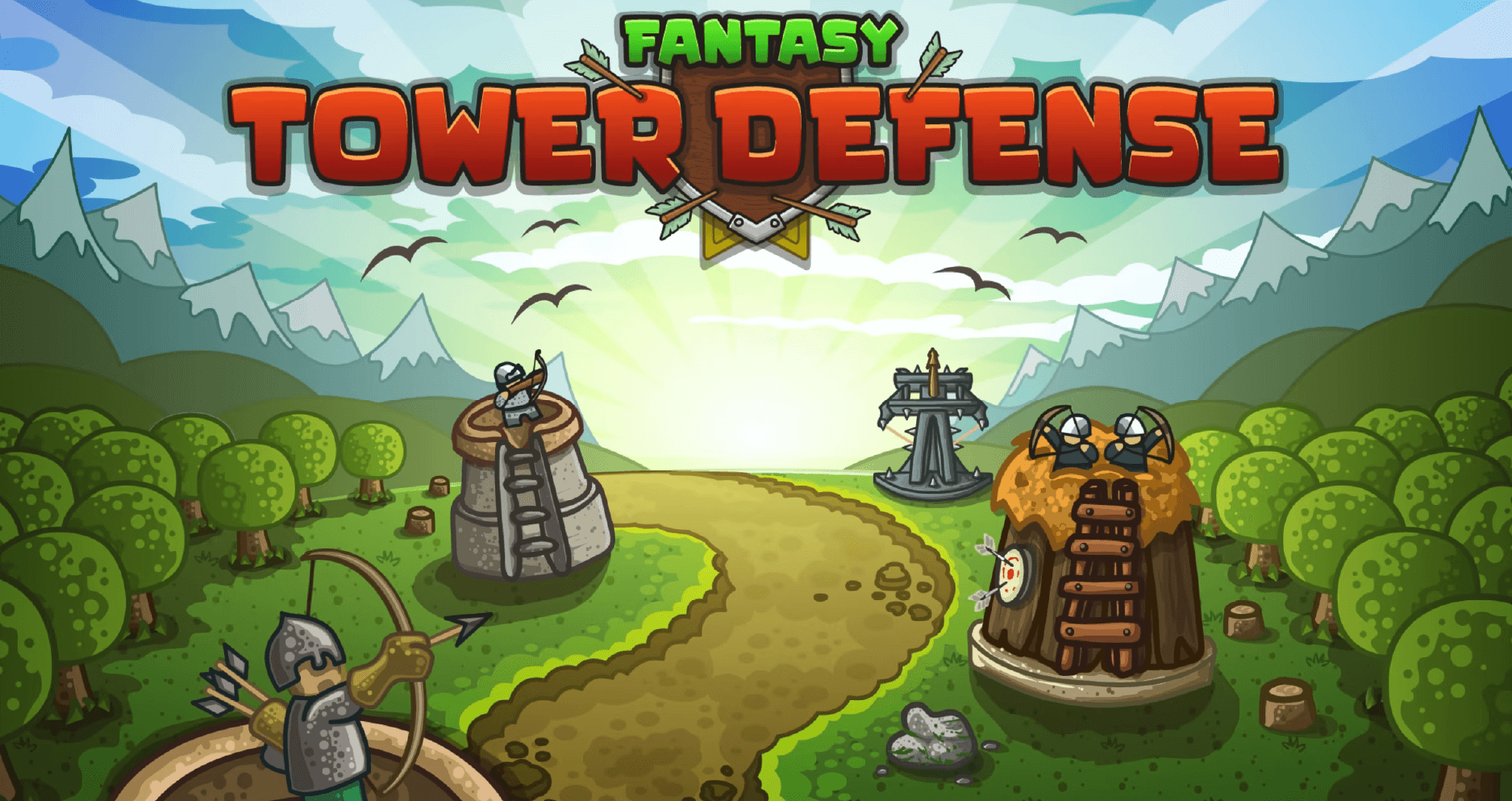
- The Kingdom Rush Series: Developed by Ironhide Game Studio, this series is a masterpiece of fantasy-themed tower defense. It features four basic tower types that can be upgraded into a variety of specialized and powerful forms. It's known for its polished gameplay, challenging level design, and the addition of powerful, controllable "Hero" units that add another layer of strategy.
- Plants vs. Zombies: A unique and wildly popular take on the genre where your "towers" are weaponized plants that you place on a grid-based lawn to defend your house from a zombie apocalypse. It's a more casual but incredibly charming and well-designed strategy game.
The Golden Age: Tower Defense as a Browser Game Staple
The history of the Tower Defense genre is inextricably linked with browser gaming. The Flash platform of the 2000s and early 2010s was the fertile ground where TD games grew from a niche subgenre into a global phenomenon. The "free to play, no download required" model made these games incredibly accessible, allowing millions of players to discover the addictive loop of building and defending directly from their web browser on sites like Armor Games, Kongregate, and Newgrounds.
This accessibility is why TD games became a cornerstone of the "unblocked games" scene. Their strategic, often pausable nature made them perfect for short breaks at school or work. Unlike a fast-paced shooter, you could plan your defense, start a wave, and then minimize the window if needed. This low-friction, high-strategy gameplay was a perfect fit for the environment.
Furthermore, the browser was a hub for indie innovation. The low barrier to entry for Flash development meant that creative developers could experiment with new ideas, leading to the birth of legendary franchises like Bloons TD and Kingdom Rush. These games pushed the boundaries of what was thought possible in a browser, offering dozens of hours of deep, strategic content for free.
With the end of Flash, the spirit of browser-based Tower Defense lives on through modern web technologies like HTML5 and WebGL. Many classic TD games have been ported, and new indie titles continue to be released, ensuring that the legacy of instant, accessible strategic fun remains a core part of the browser gaming landscape.
Similar Games for Strategy Fans
If you enjoy the strategic thinking of Tower Defense, you might also love other strategy subgenres. Games like FTL: Faster Than Light (a roguelike spaceship simulator), Slay the Spire (a deck-building card game), and Into the Breach (a turn-based tactics game) all require the same kind of careful planning and resource management that makes TD games so compelling.
Platforms and How to Play Tower Defense Games Unblocked
Tower Defense games are available on virtually every platform imaginable. The biggest and most complex titles are available as premium games on PC and mobile, while thousands of free versions can be played in-browser. Playing "unblocked" simply means accessing these browser versions on a network (like at school or work) that might otherwise restrict access to gaming websites. Reputable unblocked game portals provide a safe and easy way to enjoy these classics.
Download the Best Tower Defense Games (PC, iOS & Android)
To experience the best the Tower Defense genre has to offer, it is essential to download the official games from their trusted storefronts. This guarantees you get the complete, secure, and updated versions of these classic strategy titles.
Bloons TD 6 (The Definitive TD Experience)
- For PC (Steam): Download Bloons TD 6 on Steam
- For iOS (iPhone/iPad): Download Bloons TD 6 from the App Store
- For Android: Download Bloons TD 6 from the Google Play Store
Kingdom Rush (The Fantasy Epic)
- For PC (Steam): Download Kingdom Rush on Steam
- For iOS (iPhone/iPad): Download Kingdom Rush from the App Store
- For Android: Download Kingdom Rush from the Google Play Store
Frequently Asked Questions (FAQs)
What is the most famous Tower Defense game?
The Bloons Tower Defense (Bloons TD) series is almost certainly the most famous and commercially successful TD franchise in the world. Its latest entry, Bloons TD 6, is considered by many to be the deepest and most content-rich TD game ever made.
How do you beat a hard level in a TD game?
If you're stuck, the solution is usually to rethink your strategy. Are you using the right combination of towers? Is your kill zone in the most effective location? Often, the key is to use more support towers like slowing towers to maximize the damage of your main cannons. Don't be afraid to sell and rebuild your defenses if your initial plan isn't working.
What does "DPS" stand for in gaming?
"DPS" stands for "Damage Per Second." It's a term used to measure how much damage a tower can inflict over time. A high-DPS tower might have a very fast fire rate or deal a large amount of damage with each shot, and is usually best for single, tough targets.
Are Tower Defense games good for your brain?
Yes, absolutely. Tower Defense games are excellent for developing strategic thinking, resource management, problem-solving skills, and the ability to plan ahead. Each level is a complex logistical puzzle that requires a high degree of critical thinking.
What are "Tower Defense Simulator codes" on Roblox?
Tower Defense Simulator is a very popular TD-style game on the Roblox platform. Like many Roblox games, the developers periodically release "codes" that players can redeem in-game for free currency, experience points, or cosmetic items.
How do you deal with enemies that are immune to a certain damage type?
In more complex TD games, some enemies may be immune to a specific type of damage (e.g., a "Lead Bloon" in Bloons TD is immune to sharp projectiles). This forces you to diversify your defense and build towers that can deal different types of damage (e.g., explosive or magical) to counter them.
Should I upgrade one tower to the max or build many cheap towers?
In the early game, it's usually better to focus on upgrading a few well-placed towers. A single, highly-upgraded tower is often more powerful and cost-effective than a large number of weak, basic towers. In the late game, you will need a large number of maxed-out towers working in synergy.
What is the difference between Tower Defense and a Real-Time Strategy (RTS) game?
In a traditional RTS game (like StarCraft), you control both your base building and your mobile combat units. In a Tower Defense game, you only control the "base building" (your towers), and you have no direct control over any moving units. The combat is automated by your strategic tower placements.
What is the best place to put towers?
The best place is almost always on a corner or a loop in the path. This maximizes the amount of time an enemy spends within the tower's attack range. Placing a tower that can cover multiple sections of the path is the most efficient use of your money.
Why are flying enemies so difficult?
Flying enemies are difficult because they often ignore the carefully constructed path you've designed your defense around. They typically fly in a more direct route to the exit, and only specific "anti-air" towers can target them, making them a specialized threat you must prepare for.
Conclusion: The Endless Appeal of the Perfect Defense
The Tower Defense genre offers one of the purest and most satisfying strategic experiences in gaming. The challenge of analyzing a problem, designing a solution, and then watching your perfectly constructed machine work its magic is incredibly rewarding. It's a genre that respects the player's intelligence, rewarding careful planning, economic management, and clever thinking over simple reflexes.
From the simple, addictive fun of classic Flash games to the mind-boggling depth of modern titles like Bloons TD 6, there is a tower defense game out there for every type of player. The core loop of building, upgrading, and surviving is a timeless formula for fun that continues to evolve and captivate audiences. So go ahead, pick your favorite title, place your first tower, and discover the immense satisfaction of creating the perfect, impenetrable defense.